

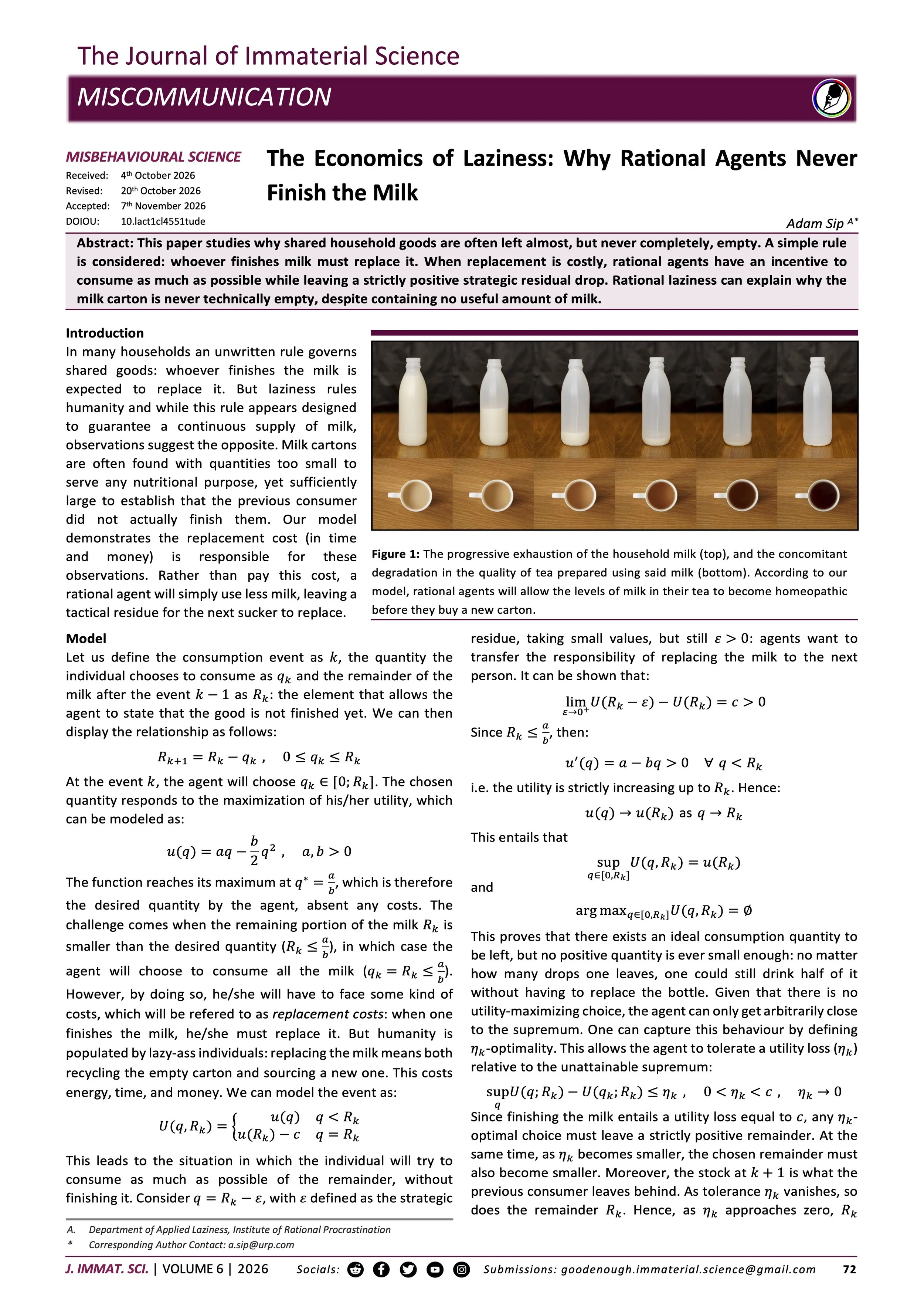
Abstract: This paper studies why shared household goods are often left almost, but never completely, empty. A simple rule is considered: whoever finishes milk must replace it. When replacement is costly, rational agents have an incentive to consume as much as possible while leaving a strictly positive strategic residual drop. Rational laziness can explain why the milk carton is never technically empty, despite containing no useful amount of milk.
